TS Imagine Brings Prediction Markets Data to Institutional Desks
Belgium Remembers 1944-1945, Tweede Wereldoorlog België, 75 Jaar Bevrijding Expert ·
Listen to this article~4 min
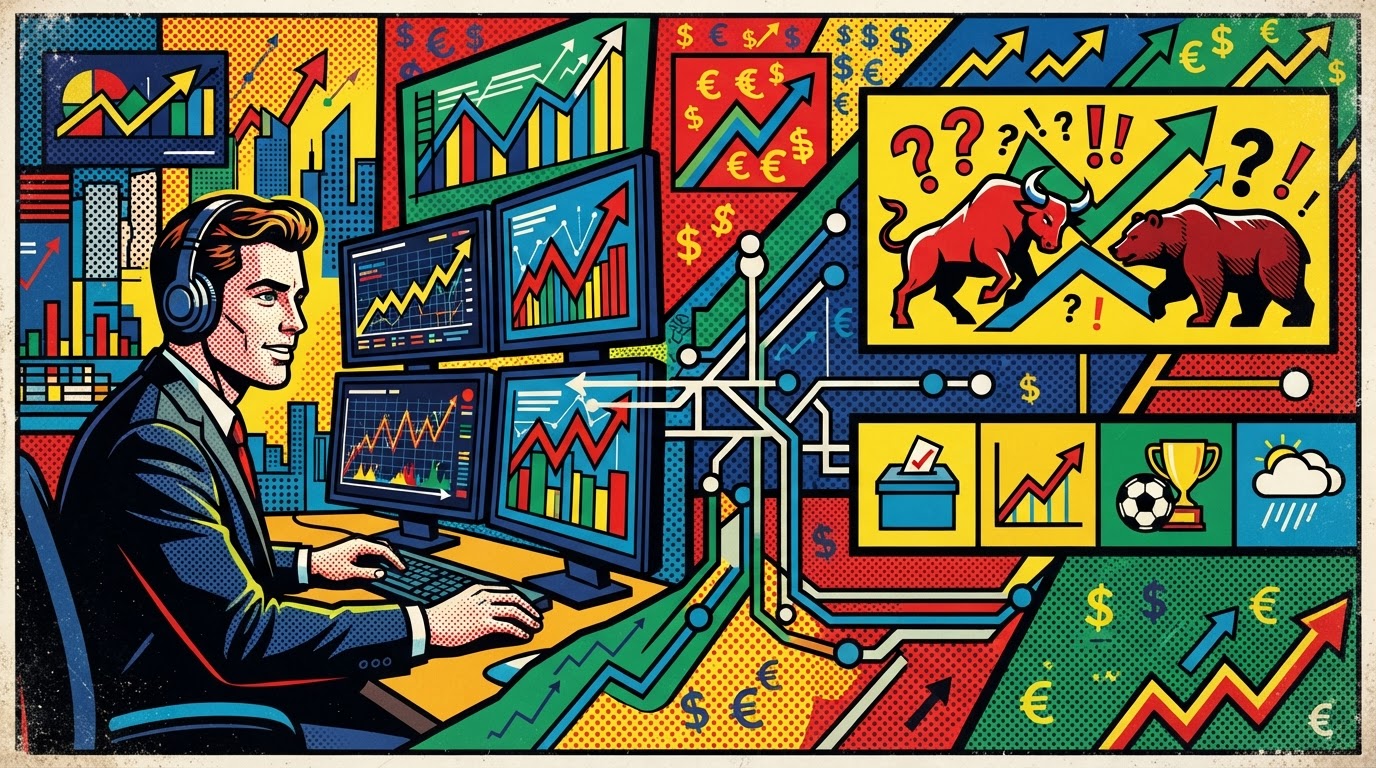
TS Imagine integrates prediction markets data into institutional workflows, giving traders real-time event forecasting signals alongside traditional market data. Here's why it matters.
The world of event forecasting is moving fast, and the latest sign just landed in the institutional trading space. TS Imagine, a well-known player in front-office technology, has integrated prediction markets data directly into its workflow platform. That might sound like a niche tech update, but it's actually a big deal for anyone tracking how financial professionals are starting to treat event contracts like any other asset class.
For years, prediction markets were mostly the playground of retail traders and political junkies. Platforms like PredictIt or Polymarket gave everyday folks a way to bet on everything from election outcomes to Fed rate decisions. But the data coming out of those markets is rich, real-time, and increasingly accurate. Now, TS Imagine is essentially saying: this information belongs on the same screens where traders watch equities, futures, and FX.
### What Does the Integration Actually Do?
Put simply, it brings event-driven pricing data into the same workspace that institutional traders already use for their daily workflows. Instead of jumping between a browser tab and a terminal, a trader can now see prediction market signals alongside traditional market data. That saves time and, more importantly, it creates a more complete picture of what the market is pricing in.
Think about it this way. If you're a macro trader, you care about what the Fed is going to do at the next meeting. You can read the economic reports, listen to speeches, and watch the futures curve. But prediction markets give you a direct, dollar-based read on the probability of a hike or a cut. That's a different kind of signal, one that aggregates the opinions of people who are putting real money on the line.
### Why This Matters for Event Forecasting
The timing makes sense. Prediction markets have exploded in popularity over the last few years, especially around major political events and economic data releases. The liquidity is still thin compared to traditional markets, but the informational value is hard to ignore. When you see a contract trading at 72 cents, the market is telling you there's a 72 percent chance of that event happening.
That kind of clarity is rare in finance. Traditional markets are messy, with prices reflecting a million different factors. Prediction markets are cleaner. They isolate a single question and let the crowd answer it with their wallets. For institutional traders, that's a powerful addition to the toolkit.
### The Elephant in the Room: Insider Trading Concerns
Of course, any discussion of prediction markets eventually circles back to the question of insider trading. If a trader has non-public information about an event, they could theoretically use it to trade in these markets. The stakes are smaller, but the principle is the same. Regulators are starting to pay attention, and some platforms have already tightened their terms of service around political betting.
Still, the integration by TS Imagine suggests that the institutional world is moving forward, not waiting for perfect clarity. The data is useful, and the debate over information asymmetry will likely play out in real-time as adoption grows.
### What This Means for Traders
For the average institutional trader, this integration is a workflow upgrade. It means less friction and faster access to a new type of signal. It doesn't replace traditional analysis, but it adds a layer that was previously hard to access. If you're already using TS Imagine for your daily operations, this is a welcome addition. If you're not, it's a sign that prediction markets are becoming a standard part of the professional landscape.
The bottom line is simple: event forecasting is no longer just a hobby. It's becoming a professional tool, and the infrastructure is catching up. That's a trend worth watching, and it's happening right now.