Trump Coin Price Forecast 2026-2030: Analysis & Trading…
Belgium Remembers 1944-1945, Tweede Wereldoorlog België, 75 Jaar Bevrijding Expert ·
Listen to this article~5 min
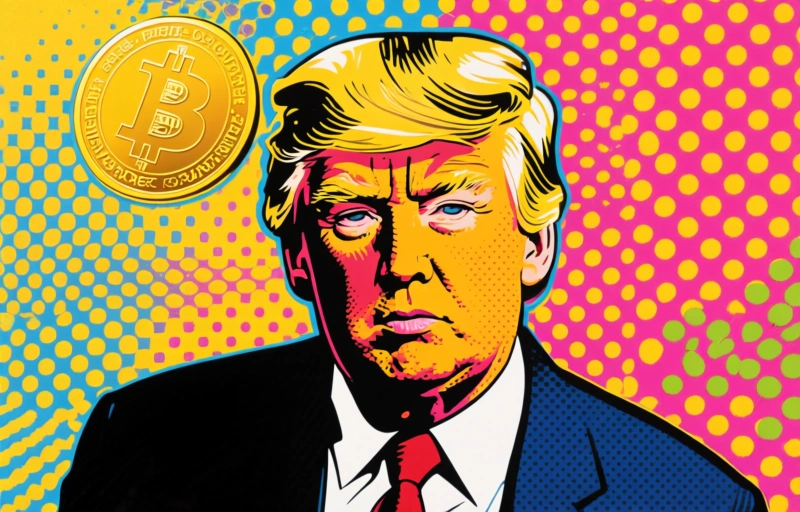
A deep-dive analysis of Trump coin price forecasts for 2026-2030, examining the political, regulatory, and market drivers that professional prediction market traders are watching.
Let's talk about something that's been buzzing in certain corners of the prediction markets and crypto trading circles. We're looking at the long-term price trajectory for what's commonly called the "Trump coin." Now, I'm not here to give you a magic number or a guaranteed win. That's not how this works. Instead, let's walk through the factors that professional traders and analysts are weighing when they think about the 2026 to 2030 window.
It's a unique asset, tied directly to political sentiment and event outcomes. Its value doesn't follow traditional crypto metrics like adoption rates or tech upgrades. It's a pure sentiment and event-driven play, which makes forecasting it a fascinating, if volatile, challenge.
### What Drives the Price of a Political Token?
You have to start by understanding the core drivers. This isn't Bitcoin. The price hinges on a few key elements that are constantly in flux. First, and most obviously, it's the political landscape itself. Polls, election outcomes, and major political events create immediate and dramatic swings.
Second, it's about market liquidity and speculation. How many people are actively trading it? Is it on major exchanges, or is it a niche market? Lower liquidity often means higher volatility. Finally, there's the broader regulatory environment for both crypto and political betting markets, which is a wildcard that could change everything overnight.
### Key Factors for the 2026-2030 Forecast
Looking five to six years out requires looking at potential scenarios. Here are the main considerations any serious analyst is modeling:
- **The 2024 U.S. Election Cycle:** This is the immediate catalyst. The outcome will set the stage for the entire next presidential term and directly impact the coin's relevance and trading volume for years.
- **Subsequent Election Cycles (2026, 2028):** Midterms and the next presidential election will be critical renewal points for interest and price action.
- **Regulatory Developments:** Will authorities crack down on political tokens or prediction markets? Or will a clearer framework emerge, potentially legitimizing and stabilizing the market?
- **Market Maturation:** As prediction markets grow, does this asset become more mainstream, or does it remain a niche product for specialized traders?
One seasoned trader put it to me this way: "Trading these assets is less about chart patterns and more about reading the political tea leaves and understanding event probability. It's insider knowledge of politics, not finance, that often moves the needle."
That last point is crucial and leads us to a thorny issue.
### The Insider Trading Question in Prediction Markets
This is the elephant in the room. In traditional stock markets, trading on non-public material information is illegal. But in decentralized prediction markets tied to real-world events, the lines are incredibly blurry. What constitutes 'material information' when the event is a political outcome?
- Is a pollster's internal data insider information?
- What about knowledge of a candidate's health or a pending scandal?
- How do you police this in a global, anonymous market?
Professionals in this space operate with this ambiguity. Some view it as the core opportunity, while others see it as the sector's biggest risk for a regulatory backlash. Any long-term forecast has to account for the possibility that the rules of the game could change dramatically if high-profile cases emerge.
### Building a Rational Forecast Model
So, how do you even begin to forecast? You build scenarios, not a single price target. You assign probabilities to different political and regulatory outcomes, and then model the potential price impact for each. For instance, a scenario where the associated political figure remains highly active and relevant through 2030 would suggest sustained trading volume. A scenario where they retire from public life would likely see the coin's utility and value diminish significantly.
The volatility will be extreme around event dates—elections, major speeches, legal rulings—with potentially long periods of drift in between. For traders, the opportunity isn't in a steady climb to a specific number by 2030. It's in capturing the massive swings around these binary events, while managing the existential risk that the entire market niche could be reshaped by regulators.
In the end, a forecast for 2030 is less about predicting a price and more about assessing the probability that this specific type of asset will even exist in its current form. That's the first question any serious analyst has to answer before they even look at a chart.