Trump Coin Price Forecast 2026-2030: Analysis for Traders
Belgium Remembers 1944-1945, Tweede Wereldoorlog België, 75 Jaar Bevrijding Expert ·
Listen to this article~4 min
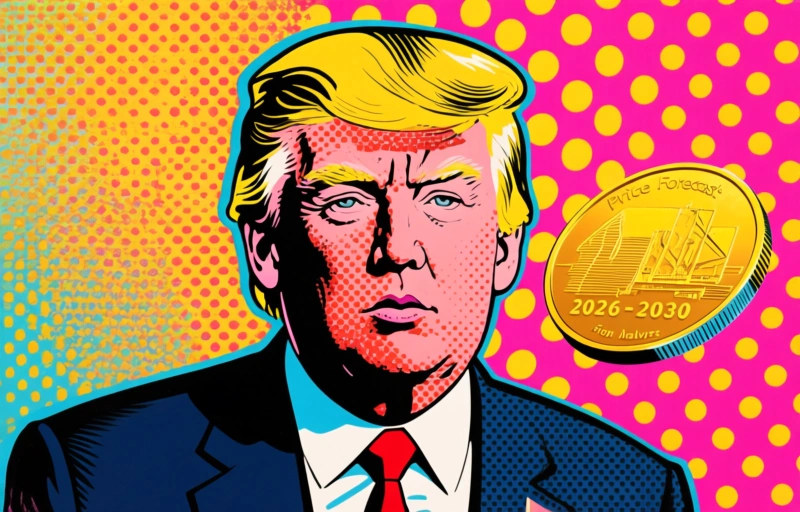
A deep-dive analysis of Trump Coin's price drivers from 2026-2030 for prediction market professionals. We examine political catalysts, insider trading risks, and key factors shaping this volatile, event-driven asset.
Let's talk about something that's been buzzing in certain trading circles: Trump Coin. It's one of those assets that sits at a fascinating, and frankly volatile, intersection of politics, speculation, and digital currency. If you're involved in prediction markets or event forecasting, you know these waters are tricky to navigate. We're not here to give you a crystal ball prediction. Instead, let's break down the factors that professional analysts are weighing when they look at the long-term horizon from 2026 to 2030. The value here is intrinsically tied to political events, public sentiment, and regulatory winds that can shift in an instant.
### Understanding the Core Drivers
Forget standard crypto analysis for a moment. The price trajectory of a politically-themed asset like Trump Coin hinges on a completely different set of variables. It's less about blockchain adoption and more about election cycles, legal developments, and media narratives. The 2024 U.S. presidential election, for instance, will create massive volatility and set a precedent for the following years. A victory could send speculative interest soaring, while a loss might see it plummet. But that's just the first domino. The 2026 midterms and the 2028 presidential race will be the next major price catalysts. You're essentially trading on political probability.
### The Insider Trading and Prediction Market Angle
This is where it gets really interesting for our audience. Prediction markets have long been a tool for aggregating crowd-sourced forecasts on real-world events. Assets like Trump Coin can sometimes act as a parallel, albeit less formal, prediction market. The key question analysts are asking is: how much of the price action is driven by genuine, dispersed speculation versus concentrated, informed positioning? It raises legitimate concerns about information asymmetry. Those with closer ties to political developments or major endorsement plans could have a significant, and arguably unfair, advantage. It's a classic market integrity issue playing out in a new arena.
### Key Factors Shaping the 2026-2030 Forecast
When building any long-term model, you have to consider both the quantifiable and the intangible. Here are the pillars any serious forecast rests on:
- **Political Calendar:** The schedule of elections, primaries, and major political conventions creates predictable periods of high volatility and volume.
- **Regulatory Environment:** SEC and CFTC stance on political tokens could change overnight, either legitimizing or crippling the market.
- **Mainstream Adoption:** Will it remain a niche asset for political enthusiasts, or see broader acceptance as a speculative instrument?
- **Liquidity and Market Depth:** Thin order books can lead to extreme price swings on relatively small trades, increasing risk.
- **Competitive Landscape:** The emergence of rival political coins could fragment attention and capital.
As one seasoned prediction market trader noted, *"Forecasting these assets is less about charts and more about understanding narrative momentum. The story is the asset."* That sentiment captures the challenge perfectly. You're analyzing the ebb and flow of a political story as much as you are analyzing market data.
### A Realistic Outlook for Traders
So, what's the practical takeaway for professionals? Expect extreme volatility tied directly to the news cycle. The period from 2026 to 2030 will likely see sharp peaks around political events and long troughs of consolidation in between. Your risk management needs to be impeccable. Position sizing is everything, because a single tweet or headline can erase gains or create them in minutes. Furthermore, always be aware of the liquidity trap—entering a position is one thing, exiting it during a panic is another. Ultimately, trading an asset like this is a high-stakes exercise in event forecasting. It demands constant vigilance, a stomach for turbulence, and an acceptance that traditional valuation models simply don't apply. Your edge won't come from a simple price prediction; it will come from a superior understanding of the political landscape and the market psychology that surrounds it.