Prediction Markets Bet on BlackRock's Rieder as Next Fed…
Emily Wilson ·
Listen to this article~5 min
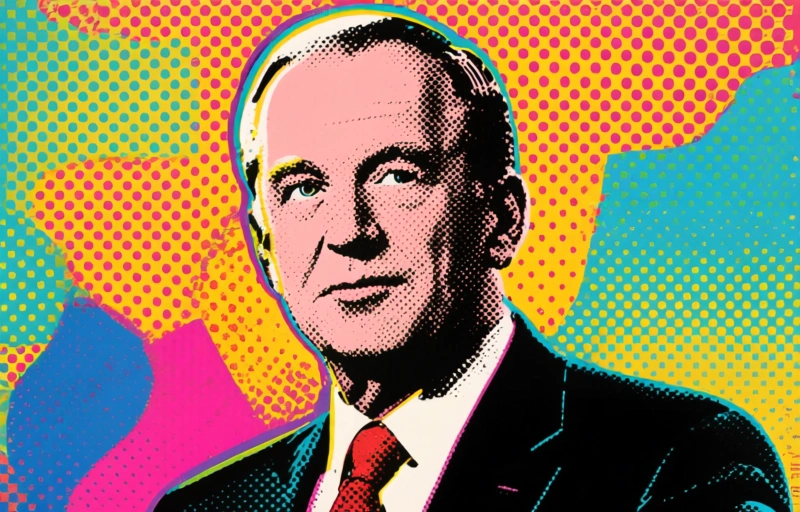
Prediction markets are signaling high probability for BlackRock's Rick Rieder as the next Federal Reserve Chair. This analysis explores the market mechanics, the insider trading debate, and what it means for event forecasting professionals.
So, you're following the Fed chair speculation? Let's talk about what the prediction markets are saying right now. It's getting interesting. The latest buzz isn't just coming from financial news desks or Wall Street analysts. It's coming from the collective wisdom of traders placing real bets on future events. And currently, they're putting strong odds on a surprising candidate.
### Who Is The Market Favorite?
The name popping up with significant probability is Rick Rieder from BlackRock. If you're not familiar, he's the Chief Investment Officer of Global Fixed Income at the world's largest asset manager. He's a known voice on monetary policy and fixed income markets. The prediction markets are essentially signaling that traders see him as a top contender to potentially succeed Jerome Powell when his term is up. It's a fascinating data point that goes beyond traditional punditry.
What makes this so compelling? Prediction markets aggregate information from a diverse pool of participants who have real money on the line. Their bets reflect not just opinion, but a financial stake in being correct. This often surfaces insights before they hit mainstream headlines. When a market consistently prices a specific outcome with high probability, it's worth paying attention.
### How Prediction Markets Work
Think of them like a stock market for future events. Instead of buying shares in a company, you're buying shares in a specific outcome—like "Rick Rieder becomes Fed Chair." The price of that share, often expressed as a probability between 0% and 100%, represents the market's collective forecast. If you believe it's more likely to happen than the current price suggests, you buy. If you think it's less likely, you sell or bet against it.
- They harness the "wisdom of the crowd" by incentivizing accurate predictions.
- They can be more nimble than polls or expert panels, updating in real-time with new information.
- They force participants to put their money where their mouth is, which tends to filter out noise.
This mechanism is why a surge in odds for Rieder is noteworthy. It suggests a segment of informed traders is receiving or interpreting signals that make this outcome seem plausible.
### The Insider Trading Question
This brings up a critical, and sometimes uncomfortable, discussion for professionals in this space: the potential for insider information. In traditional securities markets, trading on non-public material information is illegal. But the rules are murkier in prediction markets, especially for political or regulatory appointments. Could someone with early knowledge of a candidate's vetting or selection profit from it here?
It's a complex gray area. The decentralized and often international nature of these markets makes regulation tricky. As one veteran trader once noted off the record, *"The line between a brilliant forecast and an unfair advantage can be vanishingly thin in these markets."* This ambiguity is a major topic of debate among analysts and strategists who use these tools for forecasting.
For professionals, it underscores the need for robust internal compliance frameworks. Just because a market might allow a trade doesn't mean your firm's ethics policy will. The integrity of your analysis depends on clean data, and that includes ensuring your market signals aren't corrupted by activity that would be illegal elsewhere.
### What This Means For Forecasting
For analysts and strategists, this event is a live case study. It tests the predictive power of these markets against the opaque process of a major central bank appointment. Will the crowd be right? A Rieder selection would be a significant validation of prediction markets for high-stakes political forecasting. If someone else is chosen, it will lead to post-mortems on what the market missed or what external pressures skewed the odds.
Either way, tracking these odds provides a valuable, quantifiable sentiment gauge. It's a piece of data that complements fundamental analysis, economic models, and political reporting. In a world overflowing with opinions, the silent verdict of the market often speaks volumes. So, keep an eye on those probabilities. They're telling a story that's still being written, and the next chapter could redefine how we anticipate major economic leadership changes.