Bitcoin's 2024 Crash: How Low Will It Go and 2026 Price…
Belgium Remembers 1944-1945, Tweede Wereldoorlog België, 75 Jaar Bevrijding Expert ·
Listen to this article~4 min
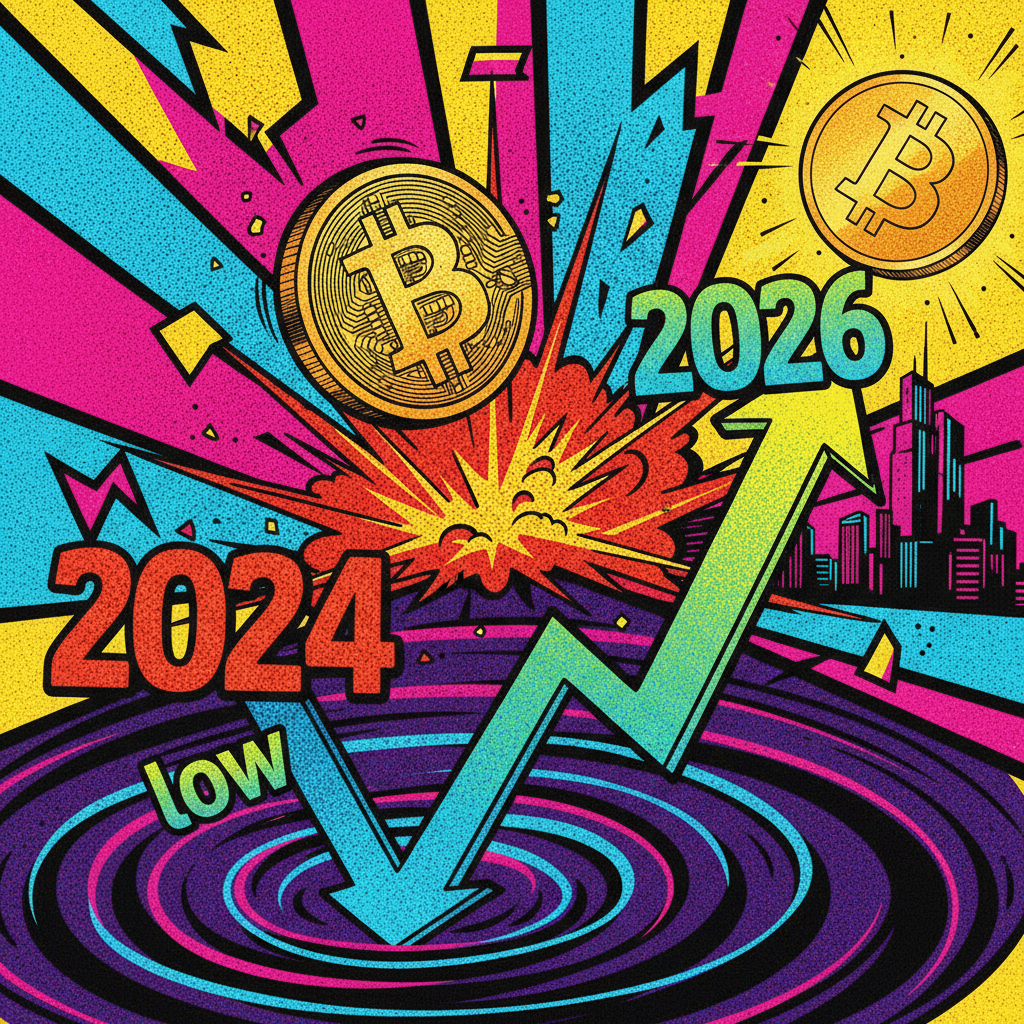
Analyzing the drivers behind Bitcoin's 2024 price crash, exploring potential bottom levels, and providing a data-informed outlook for BTC's price trajectory heading into 2026.
So, Bitcoin's taking another dive. You're probably watching the charts, wondering what's happening and where the bottom might be. It's that familiar feeling in crypto – the stomach-churning drop after a period of hope. Let's talk about why this is happening, what it means for traders, and where we might be headed by 2026.
First, we need to understand this isn't happening in a vacuum. The crypto market moves on a mix of sentiment, macroeconomics, and pure speculation. Right now, a few key pressures are squeezing the price.
### What's Driving the Current Bitcoin Downturn?
Think of it like a perfect storm. Several factors are converging. High inflation and the Federal Reserve's response with interest rate hikes have made investors nervous about riskier assets. Money is flowing out of speculative bets and into perceived safe havens.
Then there's regulatory uncertainty. The lack of clear rules in the U.S. creates a fog that institutions don't like. They want clarity before committing big capital. This hesitation removes a major potential source of buying pressure.
We also can't ignore the technical side. Bitcoin broke below some critical support levels, triggering automated sell-offs. It's a cascade effect – one drop leads to more selling, which leads to more fear.
- **Macro Pressure:** Rising interest rates make holding non-yielding assets less attractive.
- **Regulatory Fog:** The SEC's stance on ETFs and overall regulation creates uncertainty.
- **Technical Breakdown:** Key price levels failed, activating stop-losses and algorithmic trading.
- **Market Sentiment:** Fear is dominating greed right now, plain and simple.
### How Low Could Bitcoin Actually Go?
This is the million-dollar question, isn't it? Predicting a precise bottom is like catching a falling knife. But we can look at historical data and key metrics for clues. Previous bear markets have seen drawdowns of 80% or more from all-time highs.
Analysts are watching a few major support zones. The $20,000 level was a huge psychological and technical battleground in the last cycle. A break below that opens the door to much lower prices, potentially testing levels not seen since 2020.
It's crucial to remember that extreme fear often signals a potential turning point. When everyone has given up, that's sometimes when the smart money starts quietly accumulating again. But trying to time that exact moment is incredibly difficult.
> "The market can remain irrational longer than you can remain solvent." This old adage rings especially true in crypto. Protecting your capital is more important than guessing the exact bottom.
### A Realistic Bitcoin Price Prediction for 2026
Looking out to 2026 requires a different lens. We move from short-term panic to long-term fundamentals. The next Bitcoin halving is expected in 2024. Historically, halvings have preceded major bull runs, though with a lag of 12-18 months.
By 2026, the effects of that halving should be fully felt in the market's supply dynamics. If institutional adoption continues its slow march forward and regulatory clarity improves, we could see a very different landscape.
Conservative models, like stock-to-flow variants, have projected long-term price targets well into six figures. More tempered analyses suggest a gradual climb back to previous highs and beyond, assuming broader economic conditions stabilize.
The wild card is adoption. Will Bitcoin see real-world use cases expand beyond a store of value? Will it become integrated into traditional finance in a meaningful way? The answers to those questions will drive the 2026 price more than any chart pattern today.
For professionals in prediction markets, this volatility is the arena. It's about weighing probabilities, not certainties. The current crash is a data point in a longer narrative. The key is to separate the noise of daily price action from the signal of long-term trend shifts. Keep your risk management tight, your analysis sharp, and remember that in crypto, the only constant is change.